Neural Rendering for Object Capture and Analysis

Feather Gaussian Splat (30k iterations)
Gaussian Splat Full View
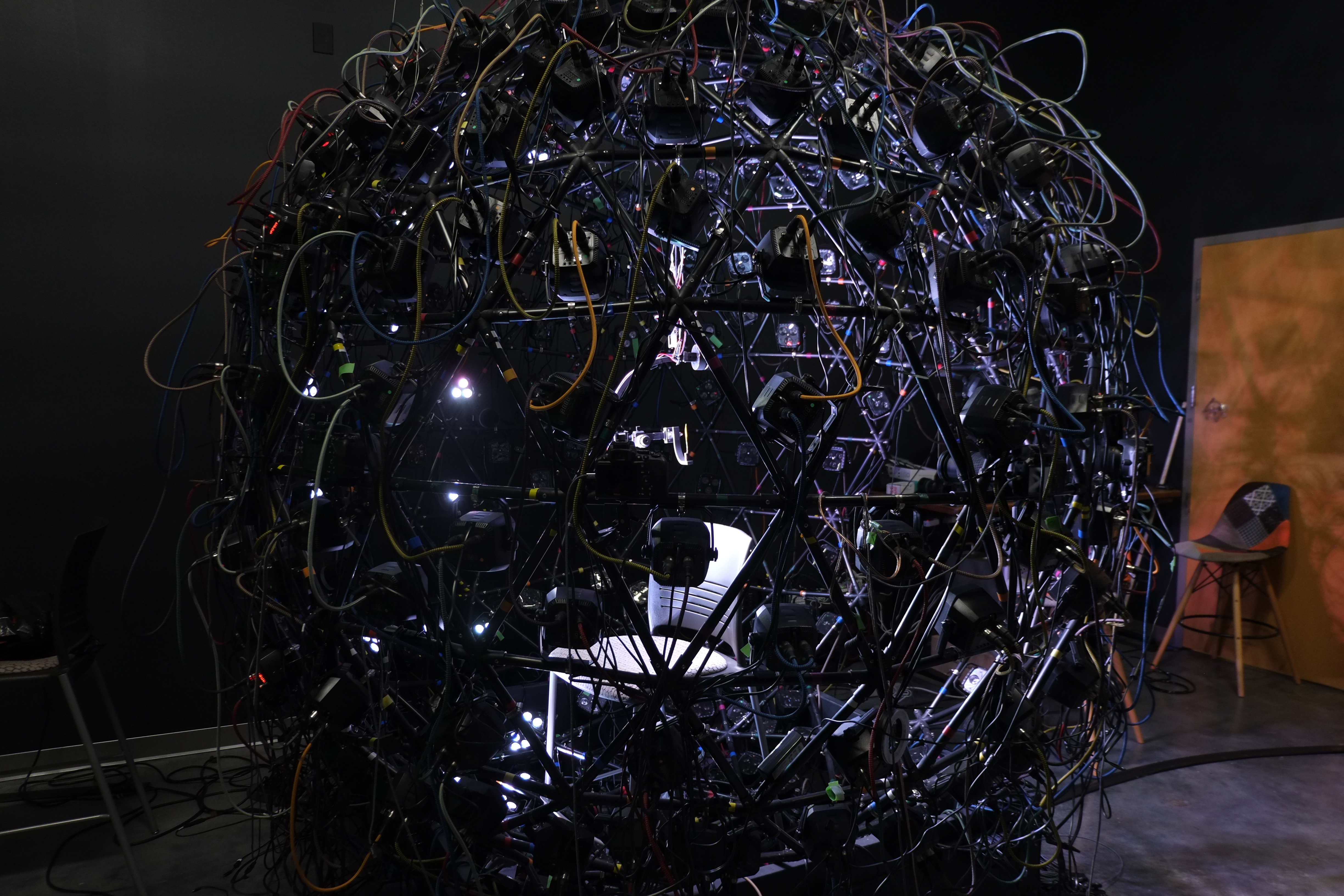
Variable Illumination Sphere (VarIS)
Advisor: Dr. Eric Patterson | Clemson University
Topics: Gaussian Splatting, Machine Learning, Material Capture, Facial Analysis
As a possible avenue for my dissertation, I am currently exploring neural inference techniques to improve vertex initialization in 3D Gaussian Splatting for facial and object reconstruction. This work focuses on leveraging multi-view feature detection to establish consistent point correspondences without the need for COLMAP algorithms that could be too expensive or incorrect.
VIPR-GS: Tracked Vehicle Simulations in Unreal Engine 5 and Project Chrono (2025)
Advisor: Dr. Eric Patterson, Dr. Gregory Mocko | Clemson University
Topics: C++, Python, Unreal Engine, Project Chrono, UDP Networking
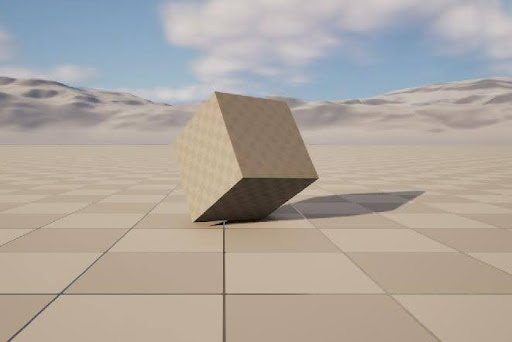
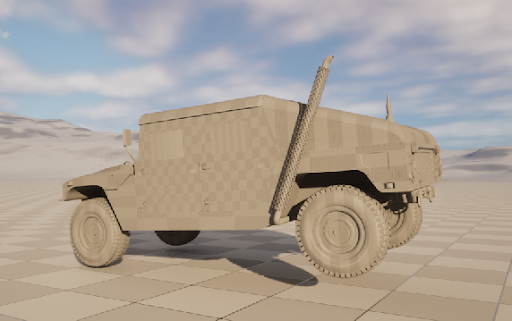
This research project explored the implementation of a Polaris Rampage in a virtual environment for simulation prototype testing. Continuing from the Seed Project, I utilize Unreal Engine and Project Chrono to create specific maneuvers for testing the capabilities of the tracked vehicle. Since Project Chrono did not have a preset model that utilized the Rampage’s specific suspension system, I also dedicated time to research how we could implement this specific system using Chrono’s given API.
VIPR-GS: Extensible Real-Time Prototyping Framework within Unreal Engine (2024)
Fractal-Sum Noise Slice
Fractal-Sum Noise Slice
Advisor: Dr. Eric Patterson | Clemson University
Topics: C++, Python, Unreal Engine, Project Chrono, UDP Networking, PyTorch
For a Seed project with the Virtual Prototyping of Autonomy-Enabled Ground Systems group, my advisor wanted to research highly accurate physical simulations pertaining to tracked vehicles interacting with high-fidelity geospatial terrain tiles. We discovered rather quickly, however, that there was not much research on a universal set of standards for interoperating between high-fidelity systems. To address this gap, we performed a survey analysis of the state-of-the-art in high-fidelity digital twin simulations with optimized and interactive visualizations. During this period, we formulated benchmark variables and created a prototype between Unreal Engine and Project Chrono to reflect these variables.
Musiplexity: Classifying Music by Genre using Data Analysis and Machine Learning (2022)
Fractal-Sum Noise Slice
Fractal-Sum Noise Slice
Advisor: Dr. Ivan Dungan | Francis Marion University
Topics: Python, Machine Learning, Persistent Homology, Signal Processing
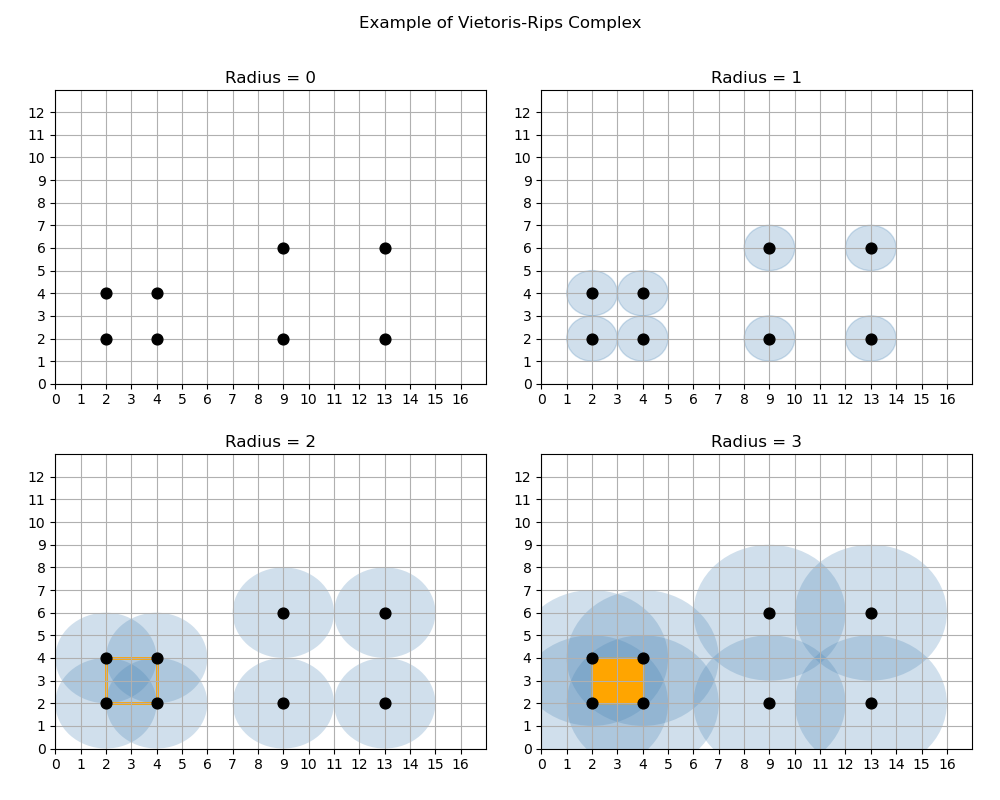
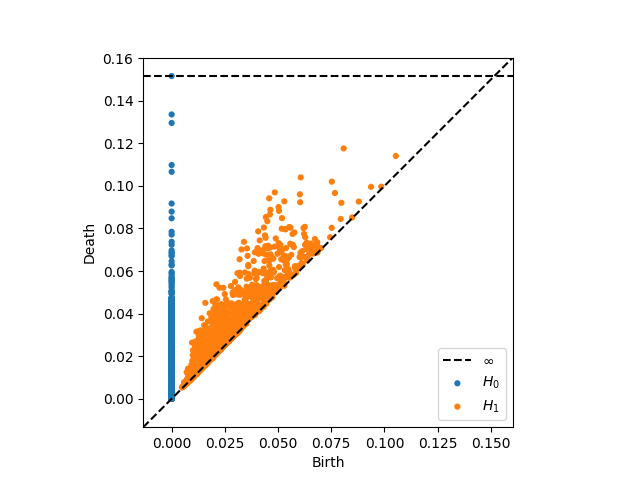
For my undergraduate thesis, I was keen on creating a research project that combined artificial intelligence and musical analysis. I partnered with Dr. Dungan and the Patriot Machine Learning Research Group to form my thesis: Can a computer classify snippets of a composition into predetermined genres accurately? I created a Python program called “Musiplexity” to estimate a selection’s genre by utilizing persistent homology and k-means clustering to analyze features found within the first thirty-seconds.